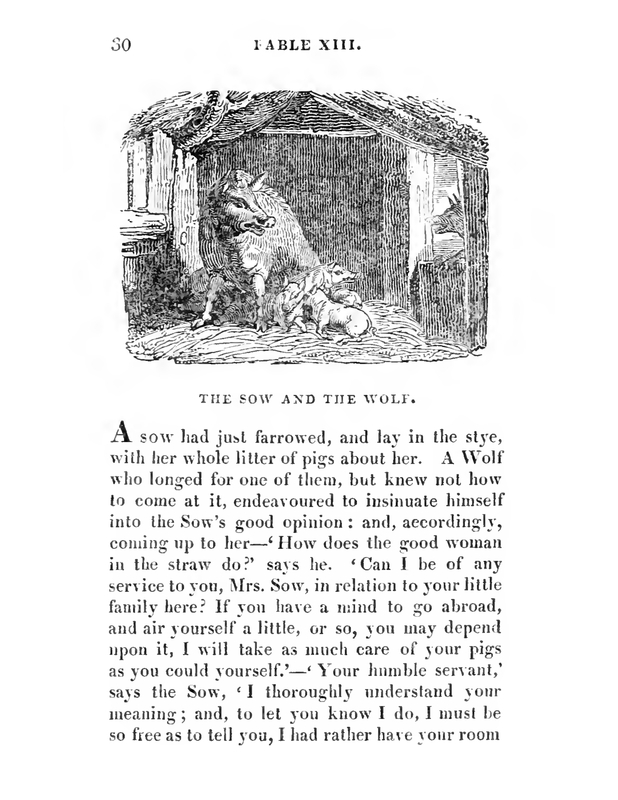
In a dry sow house, a Sow cuddled with her new-born litter of piglets. On the right side of the illustration, a Wolf peeked his head via the window, eyeing her piglets. The Sow was immediately on high altered.
Celestina, Elicia, Sempronio, Areusa, and Pármeno (in clockwise order, starting from leftmost figure) are gathered around a table at Celestina’s house for dinner. While the two pairs of lovers dine, Celestina drinks her wine. Sempronio starts praising the beauty and virtue of Melibea, which enrages Elicia and causes her to become jealous. (She is standing with her back hunched over, and Sempronio has his left hand open, both of which signal an argument.) Celestina manages to calm her, and the two lovers reconcile. Lucrecia arrives shortly thereafter, and she tells Celestina that Melibea has asked to have her girdle returned. More importantly, Lucrecia informs Celestina that Melibea has an illness of the heart and has requested her presence.
Here we see the silhouettes of several men and women from history that Gulliver spoke to with the help of the Governor of Glubbdubdrib’s necromancy skills. The silhouettes show men and women wearing different styles of clothing, indicating the eras in which they lived. Their clothes also indicate what they did when they were alive, for example, soldiers carry spears. The same image appears in the 1843 Krabbe edition.
Here we see an image of a donkey. It appears when the Council of the Houyhnhnms discussed the possibility of exterminating the yahoos. One of the reasons for this was to correct the mistake of the Houyhnhnms ancestors, who failed to breed donkeys which were more hygienic and had better agility than the yahoos. The same image appears in the 1839 Krabbe edition.
Here we see Gulliver meeting the King of Laputa. When Gulliver and his escorts arrive at court, the King is seated in his throne with a table in front of him. On the table are a variety of mathematical instruments and globes. The King has his head in hands and is deep in thought trying to work out a problem. Gulliver tells us that despite the noise they made when they entered, Gulliver stood before the King for an hour before the King worked out his problem. On either side of the King are pages, both of whom hold bladders. Once the King had solved his problem the two pages got the King’s attention by gently tapping him with the bladders, one on his right ear and the other on his mouth. This got the King’s attention and he looked at Gulliver, reminded of Gulliver’s arrival, of which he had already been informed. The King spoke to Gulliver, and Gulliver waved away the Flapper who tried to tap him, indicating he could hear the King. In this image, Gulliver has his arms crossed, leaning forward, waiting for the King to notice him. The same image appears in the 1843 Krabbe edition.
This engraving illustrates the importance that the goddess Juno holds to the city of Samos. The background of the engraving illustrates a temple which was erected in the goddess’ honour. In the foreground of the engraving, there is a marble statue of Juno dressed in her wedding attire. There are people standing in front of the statue of Juno, most likely engaging in a wedding ceremony as Juno is a goddess of marriage. Boccaccio explains that Juno was sent to live in Samos during her early childhood years until she hit puberty and married her brother Jupiter. The people of Samos built the temple and statue to honour their connection to the goddess.
To the right side of the image, Amelia Sedley, wearing a white dress, has come through the door to the drawing-room. On the left side of the image is William Dobbin in his black military uniform, bowing his head to her.
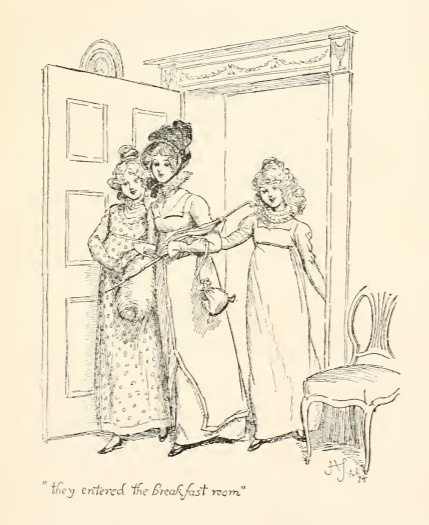
In this image Kitty and Lydia usher Charlotte Lucas into the breakfast room at Longborn. Charlotte Lucas was Lizzy’s best friend, and came over just after Mr. Collins proposed. Kitty and Lydia met her in the vestibule and brought her into the breakfast room telling Charlotte what had transpired between Lizzy and Mr. Collins. This scene occurs in chapter 20. The characters are shown in the traditional regency style. Kitty, Lydia, and Charlotte Lucas wear regency style dresses with empire waistlines. Charlotte Lucas wears a bonnet and carries a parasol, both to protect her face from the sun. The regency period dated to the early nineteenth century (1811-1820) when George, Prince of Wales, later George IV (r. 1820-1830), reigned as regent for his mentally ill father, King George III (r. 1760-1820). The regency period is associated with the rise of neoclassicism in art and fashion.
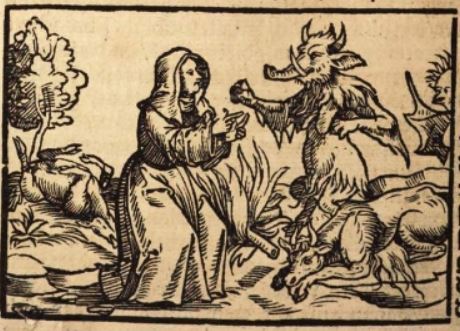
This engraving depicts Manto, the daughter of the famous seer Tiresias. She is depicted with her body leaning over a burning fire and looking at a creature with the head of a boar. Boccaccio explains that Manto became an incredible seer just like her father. She used the movement and colour of the fire’s flames to tell the future, which is why there is a fire in the engraving. She also used the entrails of animals such as sheep and oxen for signs of the future. There is an ox on the right side of the image and a sheep on the left, both dead. The ox has its organs sticking out from its body. The distinct looking creature that Manto is looking at represents her involvement in the dark arts and summoning spirits and gods from the underworld.
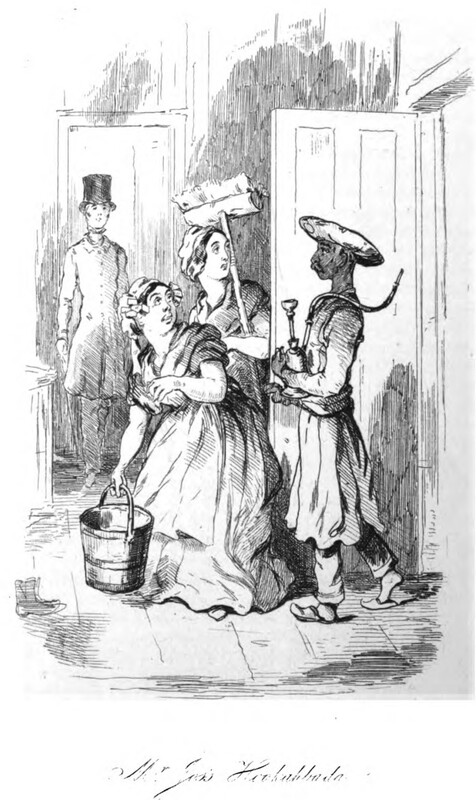
Loll Jewab, Joseph Sedley’s servant from India, carries his hookah into the inn, scaring the maids, one of whom is holding a bucket and the other a broom. The Boots stands next to an inside door, where he was going around picking up the patrons’ shoes. Below the illustration is printed in cursive its title, “Mr. Jos’s Hookahbadar”.
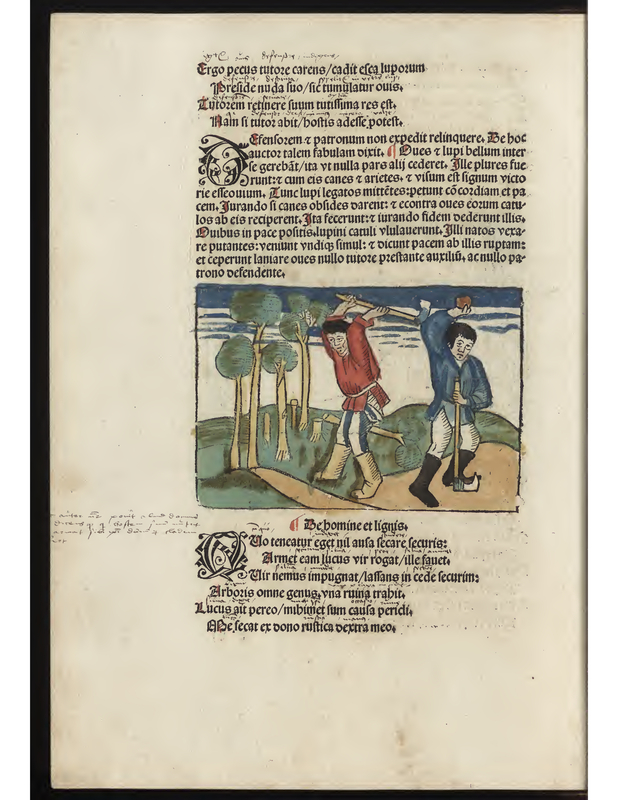
Two men are hard at work in a forest. Behind them are a few live trees, along with plenty that have been cut down. The two men looks very similar, both wearing boots, pants, and a tunic. They are holding axes; one of the men is mid-swing, while the other is using a rock to help him.
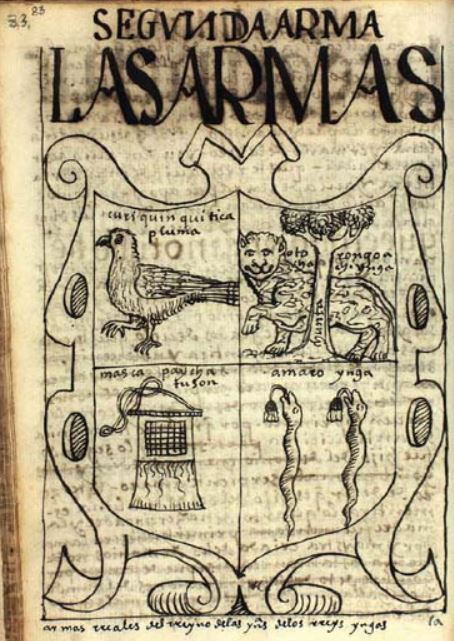
This image depicts the second coat of arms of the Incas. There is a bird in the top left corner with the words “Curi Quinquitica” written above it. This translates to “golden hummingbird.” The top right corner depicts a jaguar behind a palm tree. The bottom left corner depicts a tassel and has the words “Masca Paycha” written above it, which translates to “royal tassel.” The bottom right hand corner depicts two snakes with tassels in their mouths. The words “amaro ynga” are written above the snakes, which translates to “Inca snakes.” The very bottom of the image reads, “armas reales del reyno de las yndias de los reys yngas” which translates to “royal arms of the kingdom of the Indies of the Inca Kings.”
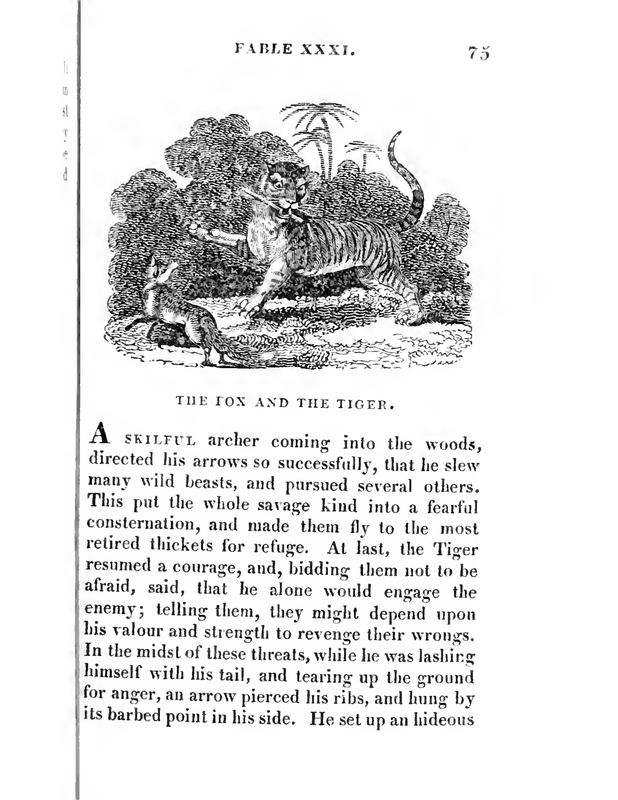
In the centre of the image is a tiger who has its front right arm in the air and a curved tail up in the air. The tiger has a stick in its mouth and appears to be surprised while looking down at a fox in the bottom left corner. The fox is facing left with its front two legs off the ground and its head turned to look up at the tiger. There are many bushes in the background, and farther in the distance are two palm trees.
While Pármeno accompanies Celestina (central figure) home, Celestina persuades him to help her scam Calisto. In exchange for his loyalty, he asks for Celestina’s prostitute Areusa, whom he loves. Celestina agrees, and they go to Areusa’s house. Celestina tells Pármeno to wait at the bottom of the stairs while she goes to Areusa’s bedroom (we see him waiting in the doorway to the left). Celestina tries to convince Areusa to give Pármeno a chance (as seen in the foreground), but she eventually calls him to Areusa’s room without agreement from Areusa. Celestina returns home while Pármeno spends the night with Areusa.
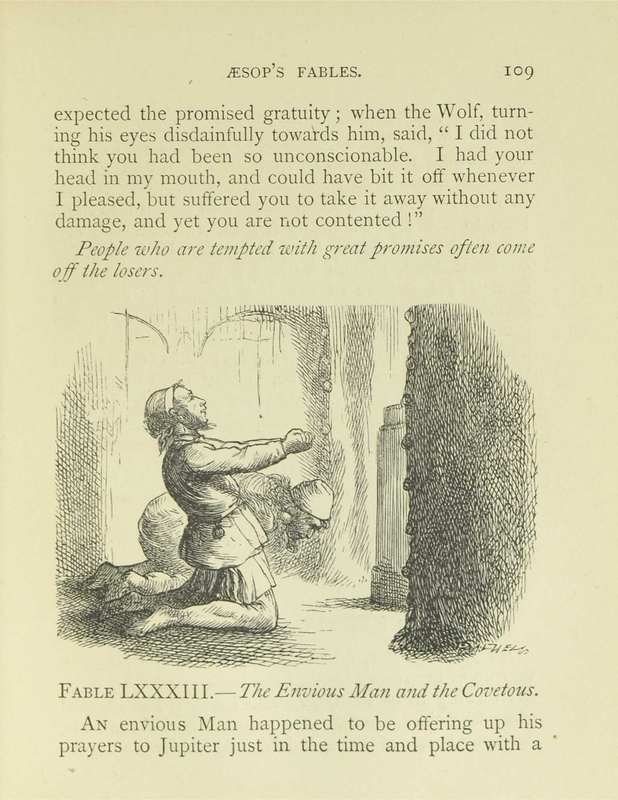
Two men kneel at an alter in a cavern-like space as if in prayer. One is sitting up on his knees, his arms stretched forward with his hands clasped together, head titled up. The other next to him is bent forward, facing the ground.
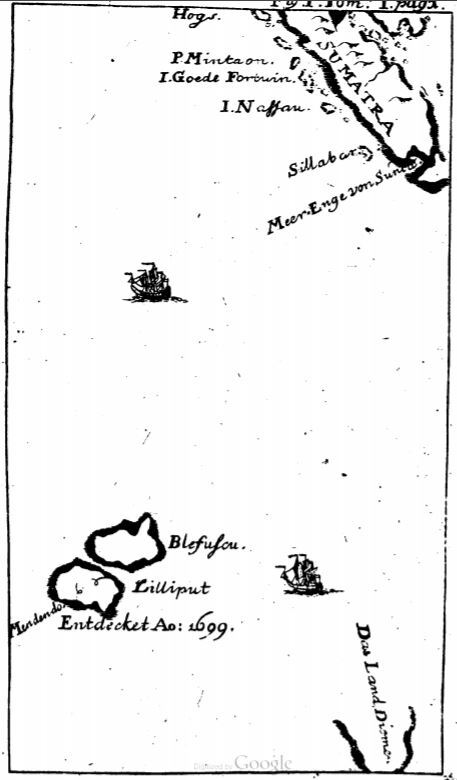
A map of depicting the fictional lands of Lilliput and Blefuscu that Gulliver visited in the first part of the story. Under the fictional lands is written “Entdecket Ao: 1699”, meaning “discovered in 1699”. The map also depicts the lands of “Diemen” and “Sumatra”. Two ships – likely the “man-of-war type ships which were popular in the eighteenth century and are mentioned in the text – are shown. The map in this edition is the same as that in the 1727 German von Wiering edition.
Here we see a chart that shows the movement of the floating island of Laputa. The island of Laputa floats on an adamantine base and moves over the mainland. The movement of the island could be used by the Emperor to punish different areas of the country.
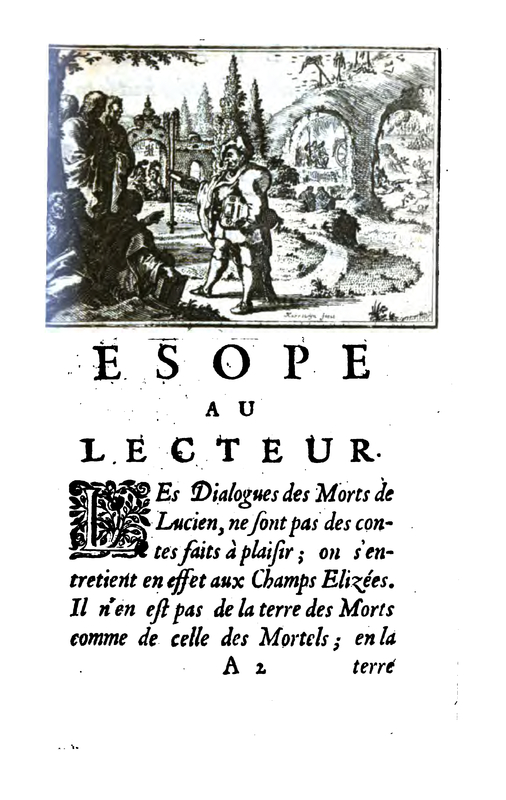
There is a man holding a pole standing in the centre of the image. He is carrying a bag and dressed like an upper class citizen from past centuries. He is looking at a group of men, around 3 or 4 in front of a tree, while the man is preaching something to them they are actively listenning. In the background thereappears to be a established civilization with working in man-made machines and a bridge constructed across the landscape (till the picture ends). There are more trees around the bridge and brids flying in the background.
Here we see a farmer from Balnibarbi tending his sheep. Gulliver left the city centre of Lagado and went into the country where he met farmers and learned about farming practices on Balnibarbi. This image appears at the beginning of chapter five and the letter “T” is in the top right corner of the image as the first word of the chapter is “The”.
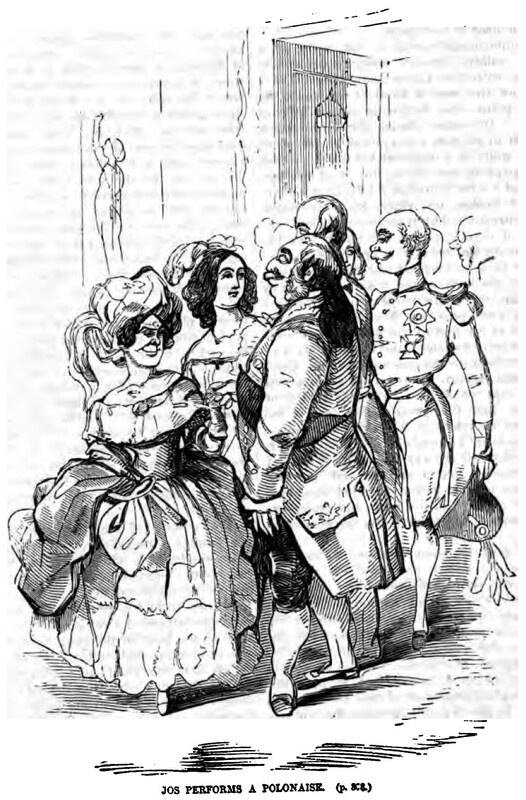
Joseph Sedley stands opposite the Countess of Schlüsselback, holding her hand as they walk a Polonaise at a Court-ball. Behind them in the row are Major Dobbin and Amelia Osborne, with another decorated officer in the pair after. Below the illustration is printed in cursive its title, “JOS PERFORMS A POLONAISE. (p. 303.)”.
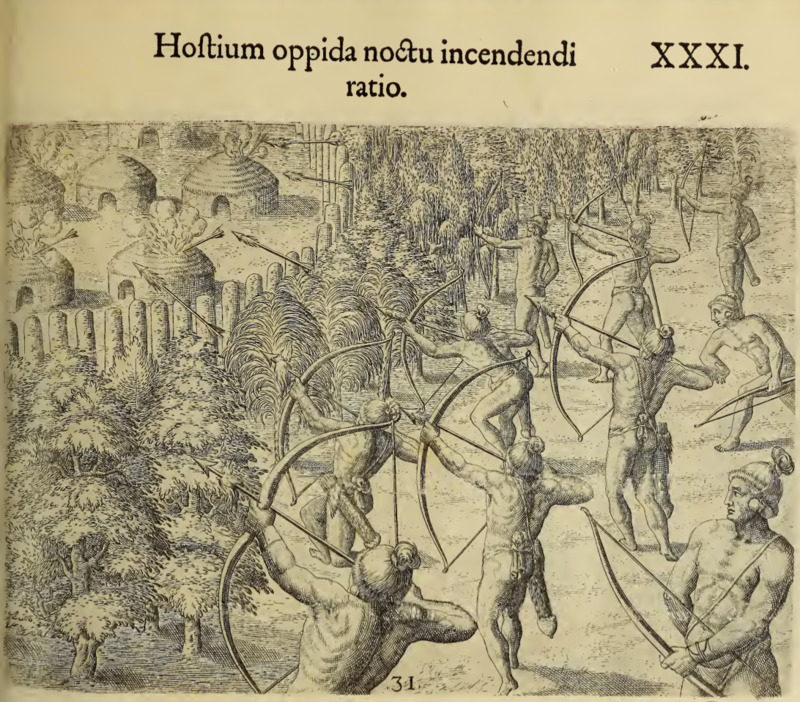
A group of Indigenous men stand outside a town. They are using large bows to fire arrows over the trees and fence surrounding a town. The arrows have been set on fire and they spread flames to the roofs of the houses in the town when they land.

![[Act IX – Celestina, Elicia, Sempronio, Areusa, and Pármeno Share a Meal]](https://cemvccol.ace-net.training/files/large/eab7191fb046e54e1ed7fa5588aa0a36061b82c7.jpg)
![[silhouettes of men and women of history with whom Gulliver spoke on Glubbdubdrib]](https://cemvccol.ace-net.training/files/large/fbebd393c40df31b0be3a64f98ccfbc1c4d616e2.jpg)
![[a donkey]](https://cemvccol.ace-net.training/files/large/5b98fd5f567c4d37df005072c94f017d8abb9fed.jpg)
![[Gulliver meets the King of Laputa]](https://cemvccol.ace-net.training/files/large/b04f1e76ea28f346bdaffd7aa4a62a102b822cae.jpg)
![[Dobbin and Amelia]](https://cemvccol.ace-net.training/files/large/2195d3ac3a4f145f9fc918b160623bcdd08db4c1.jpg)
![[Act VII – Celestina Talking with Areusa While Pármeno Waits by the Stairs]](https://cemvccol.ace-net.training/files/large/1febc622dd913f709e7f6b760bc18071cc3552df.jpg)
![[Lord Gaunt’s Children]](https://cemvccol.ace-net.training/files/large/f76b31813b2f13a0cc295d233f6c0a25e45cba07.jpg)
![[Chart demonstrating the movement of the floating island of Laputa]](https://cemvccol.ace-net.training/files/large/a7f4abf5b8ad86f6abaea1e48bbe8fe0566b9630.jpg)
![[A farmer from Balnibarbi]](https://cemvccol.ace-net.training/files/large/f8206c6f85a563fcc94e13a38d150f3a8da1fe4d.jpg)